Ice Dam Removal in Bloomington, MN
An ice dam announces itself in two ways: the ridge of ice you can see building along the eaves, and the water stain you can't ignore spreading across a top-floor ceiling. Both mean the same thing — meltwater is pooling behind the ice and working its way under your shingles. Shingles are designed to shed water that flows down over them, not to hold back water sitting in a pool. Once a dam is established, every sunny afternoon adds more melt to the pool.
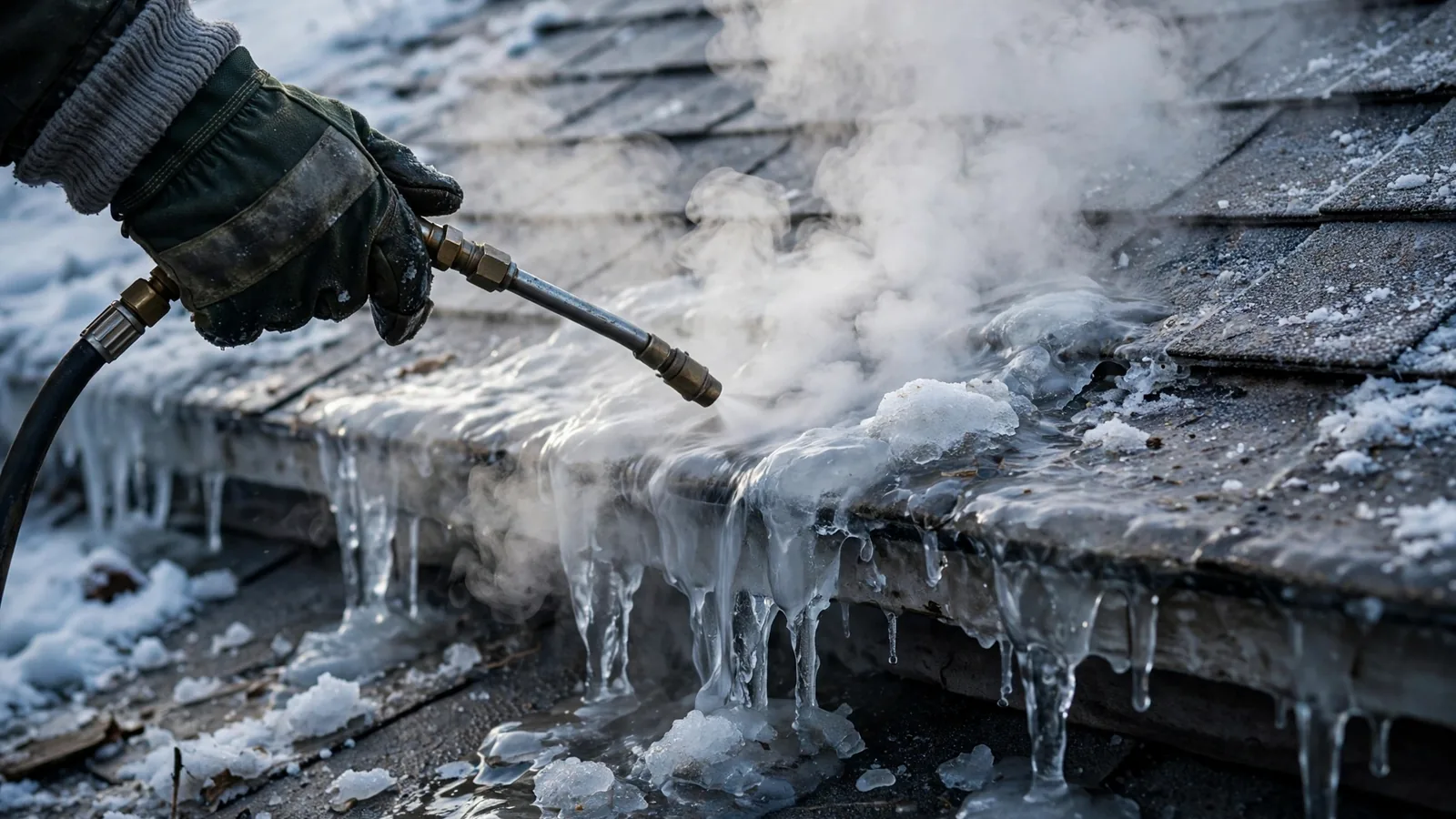
Removal is a steam job. Your provider uses low-pressure steam equipment that melts the ice in sections and cuts drainage channels so pooled water can escape — without the chipping, chopping, and prying that crack shingles and tear up the roof surface. It's slower than hacking at the ice, and that's the point: the roof underneath the dam is already stressed, and a removal that damages it trades one leak for another.
A good removal visit also looks past the ice. Your provider will tell you what they see from the roof and the attic side — where the heat is escaping, whether snow above the dam should come off too, and what prevention work would keep the dam from rebuilding. Steaming solves this winter's emergency; the attic conversation is what keeps it from becoming an annual one.
Signs you need ice dam removal
- A thick, continuous ridge of ice along the eaves, not just a few icicles
- Water stains appearing or growing on top-floor ceilings or exterior walls
- Drips that start on sunny winter afternoons and slow down after dark
- Icicles forming behind the gutters or between the gutter and the roof edge
- Peeling paint or bubbling drywall high on walls under the roofline
- Ice visible inside the attic along the eave line, or frost on the underside of the roof deck
How your provider removes an ice dam
1. Roof and leak assessment
Your provider starts by matching the interior leak to the roof above it — which section of dam is feeding the water, how thick the ice is, and what the roof surface looks like around it. That map decides where the steam work starts.
2. Steam removal in sections
Low-pressure steam melts the dam in blocks and cuts channels through the ridge so trapped meltwater drains off the roof instead of pooling behind the ice. No chisels, no axes, no prying against the shingles.
3. Snow cleared above the dam
The snowpack sitting above the dam is its fuel supply. Your provider clears the roof snow feeding the melt — often as part of the same visit — so the dam doesn't simply rebuild overnight.
4. Attic-side findings and next steps
Before wrapping up, your provider explains what caused the dam at your house — the heat-loss pattern, the insulation picture, the ventilation — and what prevention work would address it. You decide what happens next, with the full picture in hand.
Ice dam removal in Bloomington homes
Bloomington's roof shapes set the removal script here. The city's ramblers and split-levels have long, low-slope eave lines where ice builds evenly and thick, and split-levels add a complication: the upper roof drains onto the lower roof, doubling the meltwater at exactly the wrong spot. Homes near the Minnesota River bluffs and in the older east-side neighborhoods carry decades of layered snow history, and 1970s cathedral-ceiling builds dam along the whole slope, not just the edge. Local pros know to check the valleys and the lower-roof junctions first — that's where Bloomington dams do their worst damage.
Need ice dam removal in Bloomington?
One call connects you with a local technician. No forms.
(555) 234-5678📞 Call Now